March 16, 2026
Kai Macann
Scepticism Medeley
From shadows to simulations, how do we know what's real?
Introduction
Imagine spending your entire life chained in the dark, absolutely convinced that shadows dancing on a wall are the entirety of the universe. This terrifying concept is the historical foundation of scepticism, a philosophical tradition dedicated to dismantling everything we think we know.
Plato's Cave:
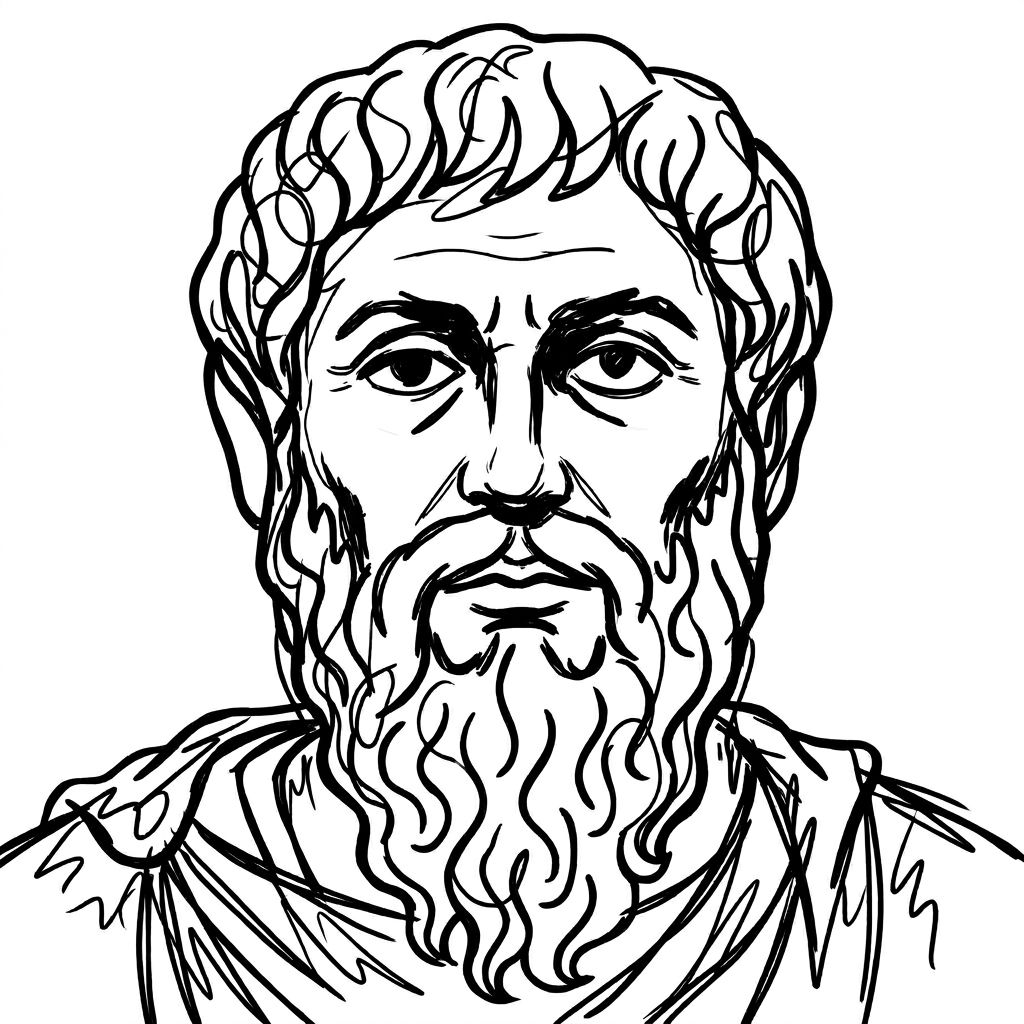
PlatoAn allegory detailing prisoners who mistake shadows on a wall for reality, until one escapes into the painful sunlight and discovers a three-dimensional world.
Around 375 BCE, the ancient Greek philosopher Plato created this brilliant allegory to explain the painful process of enlightenment. It set the stage for thousands of years of epistemological panic, asking a simple but highly destructive question: what if our senses are constantly lying to us?
Would you drag your friends into the painful sunlight, or let them live happily in the dark?
Ancient Epoché and the Suspension of Judgment
Long before we worried about computer simulations, ancient thinkers were actively trying to break their own reality. The most extreme of these was Unknown Term, who founded a school of thought that pushed doubt to its absolute psychological limit.
Pyrrhonism
Pyrrhon·ism
An ancient school of scepticism arguing that because arguments on both sides of any issue are equally strong, one must suspend all judgment to achieve peace of mind.
Pyrrhonists argued that every single argument has an equally valid and forceful counter-argument. Therefore, the only rational response is Epoché—the complete and utter suspension of judgment. By giving up the desperate need to find absolute truth, they believed humanity could finally achieve a tranquil peace of mind.
Critics immediately attacked this as unliveable. If you genuinely suspend judgment about gravity, won't you just walk off a cliff? The sceptics countered that they simply acted on appearances and instinctual habit to survive, without ever formally committing to the 'truth' that the cliff actually exists.
Can you realistically live your daily life while suspending judgment on absolutely everything?
The Cartesian Reset
Fast forward to 1641, and the French philosopher René Descartes decided to weaponise this deep scepticism to build a totally new foundation for science. He realised his upbringing was packed full of false beliefs, so he adopted 'methodological doubt'—throwing out every single assumption he held to see what, if anything, survived.
The Evil Demon:
René DescartesA thought experiment proposing that an all-powerful, malicious entity is constantly deceiving your senses, meaning your entire perceived reality is a simulated illusion.
If an all-powerful, malicious demon is manipulating your mind, then nothing is real. The sky, your body, and even basic math could just be fabricated illusions. But René Descartes found one tiny, indestructible lifeboat in this chaotic sea of doubt.
René Descartes:
I think, therefore I am.He realised that even if a demon is expertly tricking him, he must possess a conscious mind to be tricked in the first place. Counter-arguments quickly arose, most notably the 'Cartesian Circle'. Critics pointed out that René Descartes relied on his own 'clear and distinct' reasoning to prove a benevolent God exists, to then prove that his clear and distinct reasoning wasn't being hijacked by a demon. A massive logical loop.
Does knowing you have a conscious mind provide comfort if the rest of the universe is fake?
Empiricism and the Problem of Induction
While Descartes used doubt to prove his own existence, the Scottish philosopher David Hume used it in 1739 to destroy the foundations of science itself. As an advocate for Empiricism, he argued that all knowledge must come strictly from sensory experience, which led to a terrifying logical conclusion.
The Problem of Induction
The Prob·lem of In·duc·tion
The philosophical question of whether inductive reasoning leads to absolute knowledge. It highlights that assuming the future will resemble the past is a psychological habit, not a logical certainty.
We assume the sun will rise tomorrow, or that gravity will work, simply because it has happened every day before. But David Hume pointed out that there is absolutely no logical proof that the future will resemble the past. Our belief in cause and effect isn't based on rational certainty; it's just a deeply ingrained psychological habit we've developed to survive.
In the 20th century, philosopher Karl Popper attempted a modification to save science, called Falsificationism. He argued that science doesn't actually 'prove' things via induction; it simply tries its best to 'disprove' them. We conditionally accept whatever theories survive the assault, without ever claiming them as absolute, unshakeable truths.
Are you comfortable accepting that the fundamental laws of physics are just psychological habits?
The Modern Matrix
Today, this epistemological paranoia has received a massive technological upgrade. Instead of evil demons, contemporary philosophers like Unknown Term and Unknown Term ask us to consider the digital equivalent of Plato's Cave.
Brain in a Vat:
UnknownA scenario where a disembodied brain is kept alive in a jar and connected to a supercomputer that feeds it electrical impulses, perfectly simulating a virtual reality.
Unknown Term's Simulation Argument takes this further: if a post-human civilisation ever acquires the computing power to run millions of ancestral simulations, statistically, we are almost certainly in one of the simulations right now, rather than base reality.
However, Unknown Term offered a brilliant linguistic counter-argument called semantic externalism. He argued that if we are truly brains in a vat, our words only have meaning within the simulation. Therefore, the word 'vat' refers to the simulated, pixel-vat, not the real one holding our physical brain. By his logic, the statement 'I am a brain in a vat' is entirely self-refuting.
Does it actually matter if we live in a simulation, as long as the experience feels real to us?
Conclusion
We navigate our daily lives assuming the floor will hold our weight and our eyes are telling us the truth. We make educated guesses because curling up into an existential ball of panic isn't very practical for society.
But the history of Epistemology serves as a humbling reminder that our perception is fragile. We are all still prisoners staring at shadows, trying desperately to decode the light outside.
The search for objective truth might be the most important quest in human history. But given our biological constraints and the vastness of the universe, is the true nature of reality ultimately solvable, or is it inherently unknowable?